


Knowledge goes hand-in-hand with responsibility. It’s handed down from generation to generation so that wisdom is never forgotten. We are guided by knowledge and exist in this world by learning about the relationship which exists between us and the land. Knowledge isn’t a right, but rather, accessing higher levels of knowledge is a sacred practice and is to be respected (Calma 2009).
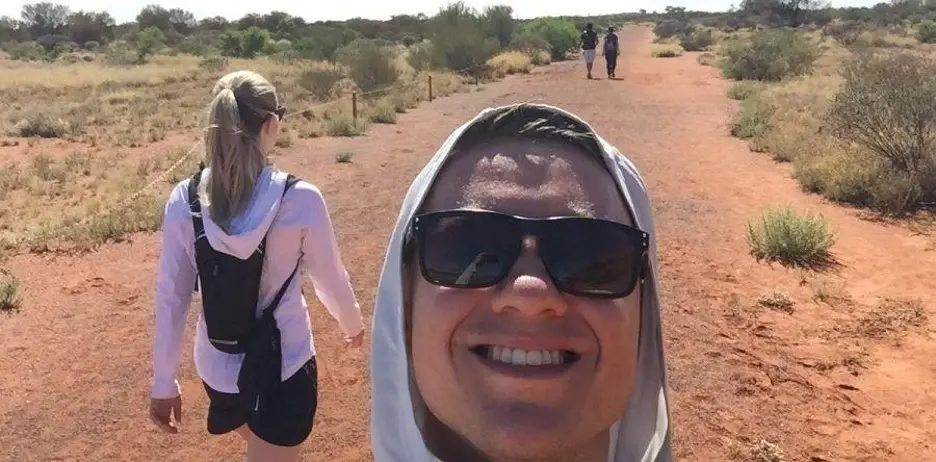
This is a beautiful perspective of knowledge that is held by many Aboriginal Australian people. Proceeding my trip to Uluru in 2016, where I had the privilege of learning about the Aboriginal Australian culture, I became deeply fascinated with the cultural practice of knowledge sharing. This experience was the foundational block that propelled my curiosity to use virtual reality (VR) to respectfully facilitate the sharing of Australian Aboriginal knowledge.
I have a Macedonian heritage, meaning that my understanding of Aboriginal Australian culture is predominantly based on primary and secondary education. One of the first things I can remember learning is the age of Aboriginal Australian culture, which dates back around 50 000 years. To maintain cultural practices across this time, storytelling was performed to ensure that each generation knew how to live with the land.
The land provided for the people and the people nurtured the land, participating in a cyclical and flourishing, interdependent relationship. Art is used to symbolize The Dreaming and includes practices such as painting, music, dance, song, body art, and other customs. Unlike Western society's very distinguished art industry, traditional Australian Aboriginal art was a way of life and was performed by the entire community, every day.
My experience at Uluru revealed to me the importance of knowledge in this culture and such a beautiful perspective merits preservation. I acknowledge that the destruction and displacement of traditional communities has significantly altered knowledge sharing practices. I am hopeful to utilize VR technology and develop a better method to communicate and share Aboriginal Australian history and culture.
VR, as an immersive experience, could facilitate knowledge sharing in a seemingly life-like way. By no means am I suggesting that technology should replace traditional methods of knowledge sharing but rather, it could be utilized to assist in the scale of select knowledge. While some information is sacred due to its spiritual and cultural significance, VR could store and communicate publicly accessible information. While many people may have heard about Aboriginal Australian culture, VR would bring experiences to life. The user would be able to hear the singing, see the dancing, smell the smoke, and learn through a realistic experience. By putting oneself in a situation that goes beyond explaining Aboriginal Australian culture, a more holistic appreciation of knowledge systems can be developed.
Not only would this method of knowledge sharing help to increase education but it could assist future generations who have an Aboriginal Australian heritage to better connect with their ancestry and culture.
The purpose of sharing my ideas is to question whether or not VR can facilitate the preservation of knowledge. Your support, insights, experience, and clarity are greatly appreciated and will guide our future decisions about this initiative.
Need some guidance for your tech startup or project? Book a free consult with me.